Lily Piette and Her Sculptural Cities
By: Benjie Salazar, AKA, Sandy
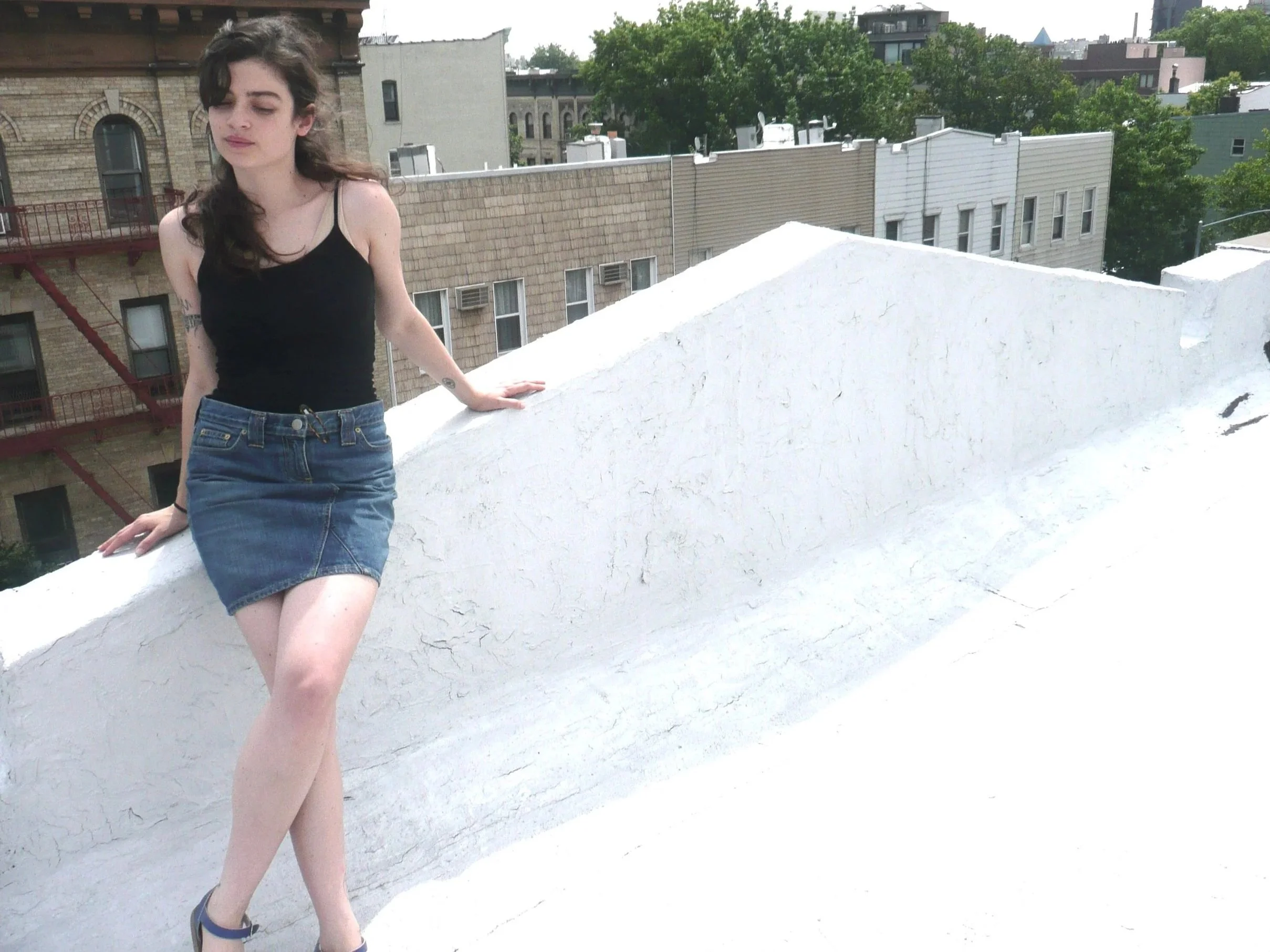
Nearly two years after the release of Her Computerized Machinery Complex, a record filled with the sensuality and obfuscated reality of our digital age, Lily Piette’s next journey is one on the precipice of sculptural cities and their constantly moving and mysterious nature. You could point to the anthropomorphisms in Piette’s songs like “The Letter” and “Coloring Book”, lending affection, fondness and dissociative qualities to quantum computers, space and time. Relational reality then becomes something not reserved for humanistic pleasures. They are for everything, and everyone. Lily Piette’s music strikes a middle ground between the mystery behind our interpersonal relationships, our sensations, and how dreams and reality often overlap. It is this rare quality that makes Piette’s music fascinating and addictive.
The following is from a conversation between Lily Piette and I on the afternoon of Sunday, April 4, 2026.
B: Hi Lily, nice to meet you, tell me a little about yourself and your musical process
L: Well, I grew up in LA, I started writing songs and learning guitar around 16, then picked up the bass soon after. I started playing bass in people’s bands and collaboratively.
L: When I was like 17 and just starting out I met this musician, who I’m actually going to see today, who at one point just said, “you have good ears, why don’t you be my second set of ears in the studio”. Throughout high school and college I would help her and she would teach me everything she knew about production and mixing.
L: I don’t know how she knew she just knew, and she gave me confidence in a field (music production) that is mostly dominated by men.
B: You are also a visual artist?
L: Yes, nowadays I have an equal balance of making music and painting
B: Is there a new project you are working on?
L: I’ve been working on this new record which is basically done, I am just finishing mixing now and it should be out sometime this summer.
B: What kind of things have been inspiring you for this new record, as I know the last one had a rich visual and written component with the accompanied website, which is fascinating.
L: When I started writing this record I was really into Crash, both the book by J.G Ballard and the movie by David Cronenberg, are you familiar? On a surface level it has to do with people being turned on by car crashes, but to me what makes the movie good isn’t that at all. Basically, in the movie, there are the people, there are the cars, and then there is just this huge metal expanse of a city. No one is walking around, it is just there, constructed. A sculpture.
B: How did the new record come about, or when?
L: Well, at the time, it was my last year of school in Boston, and I had maybe six months left and I felt as though I wanted to take everything in. I was taking a lot of walks and spending a lot of time out at night or the early evening. I would look out at the highways, that strange light you see at night on an empty street. You get that feeling that overcomes you and go ahhhh what is this feeling! A strange preacher of the city, that comes out when you are alone, conditions have to be just right.
L: I was essentially observing the city as this moving cement sculpture, an entity. It came over me that this is why you feel certain things, how things constantly change, things that are there in the foreground. An explanation on why that sensation occurs perhaps.
B: Who were you listening to at the time?
L: Lots of Polvo, Unwound, Enon and Brainiac.
L: The dissonant, metal, electric landscapes
L: That is a lot of how I went into it, staying in that world.
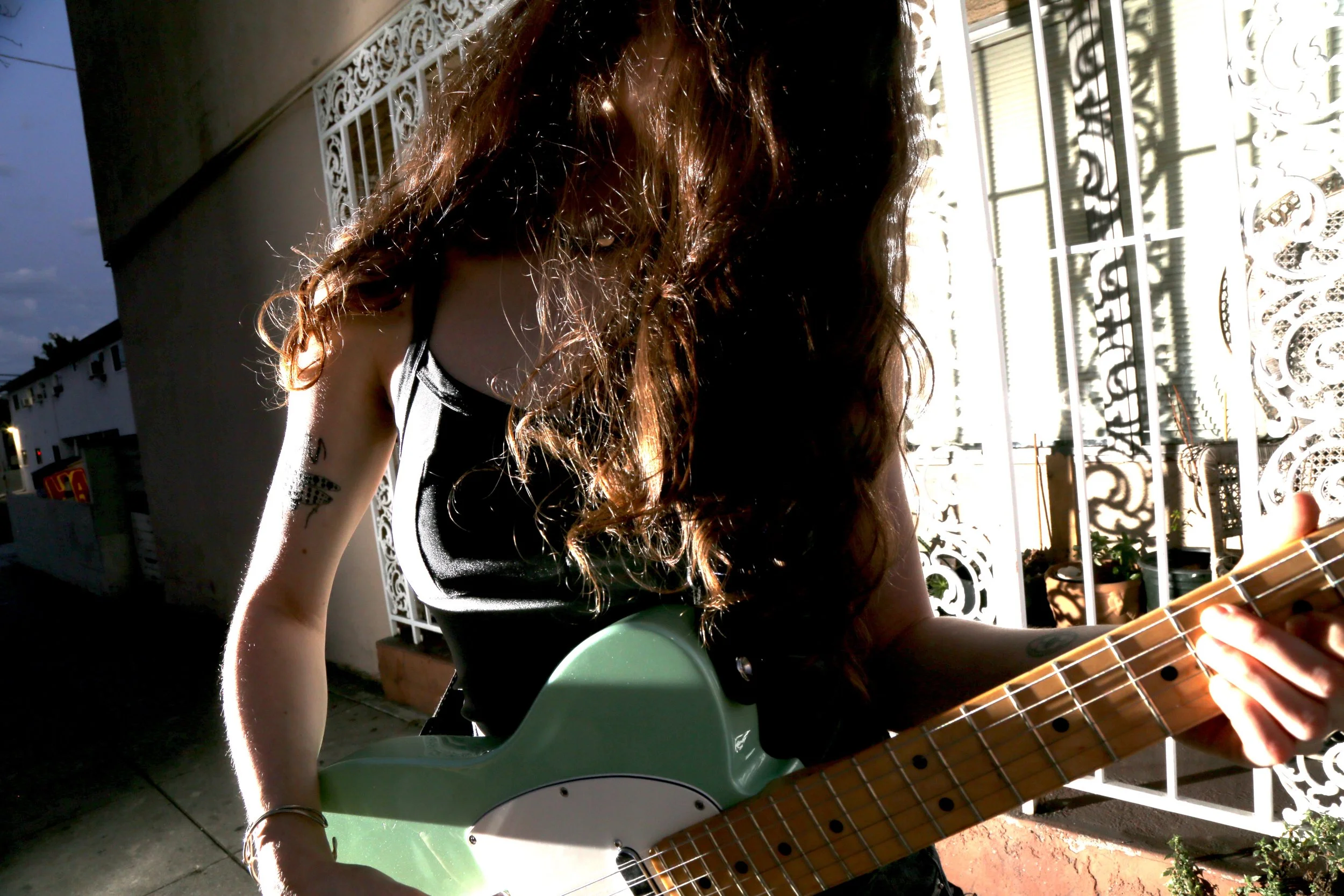
B: How has this production process been different from Her Computerized Machinery Complex?
L: Well, I basically made Her Computerized Machinery Complex completely alone in my room while I was abroad in London. Due to having so much creative free-time for the first time in my life it provided me the possibility to create the record.
Now, with this new one…
L: It has been a more collaborative process. I met a really great producer who I aligned with. We recorded mostly in this two-week chunk. I almost went all the way to get someone else to mix it, but I ended up mixing it myself. I have more tracks that I’ve ever had but I’ve been liking the challenge and proving people wrong who tend to think musicians are too close to a song to mix it.
B: Is that such a bad thing to be so close to the song though?
L: I don’t know
B: Would you consider yourself a perfectionist or do you know when something is complete?
L: I wouldn’t even consider myself a perfectionist, I just know how I want something to sound.
B: Is there also a visual component to this record much like Her Computerized Machinery Complex?
L: I started doing all the visual aspects of the record (Her Computerized Machinery Complex) after I was done with the record. I don’t think I really know yet exactly how it will look like but I know there are things I want to bring to life.
B: That feels like something tangible, with the moving cement sculptures. How a city has moving parts that directly influence every life, everyday night.
B: I still am curious though; how would you describe a quantum computer?
L; Okay so basically, normal computers have ones and zeros, like true or false whereas quantum computers have a 3rd option which is maybe. Due to that, quantum computers essentially attain a god-like ability, it has access essentially to the multiverse and every possible outcome. It feels as though we accidentally created God.
L: I also knew someone at the time who was studying quantum computers, and he said that we have no idea what we have constructed. Then one time, he showed me a photo of the computer it looked like an angel. The golden-type thing you see though is mostly just the cooling system because the computer itself is tiny and can only live when you create certain conditions that must be met. It is beautiful.
B: Do you name any of your machines, like your laptop?
L: I honestly don’t but I do feel a kinship, like oh you’re pretty, when I see my laptop or other things I work on.
B: How does writing come about for you?
L: With lyrics I honestly struggle a lot. They are usually the last component. I begin by humming a melody and have stand-in lyrics which turn into something else. Sometimes though I end up using the stand-ins, I realize that these stand in lyrics are coming from my subconscious mind. They become somewhat revealing to me at the time, and it doesn’t always happen but months later when I read back, it is true.
B: Are you playing more shows in New York soon including the Paper Moon showcase?
L: Yeah, now that the record is wrapping up, I want to play much more in the summer.
B: What else is a big part of your life?
L: Movies are a huge part of my life.
L: Recently, I saw this movie called Holy Girl, by Lucrecia Martel, she is Argentinian and I watched all her movies, they are so good. If you’re looking for something mysterious or clouded, watch The Double Life of Veronique. Like how endings go with movies like this, how you are not being told and so you can come up with your own conclusion. I like things like that.
B: What do you love about New York?
L: Everyone is just in the same boat, like in the dreadful summer, when the only breeze is that of the passing train on the platform.
L: That is my favorite thing living in New York, the community. It wasn’t until recently that I realized just how small of a scene it really is.
L: It is very special.
Lily Piette is playing this Friday, May 15th, at Purgatory as part of Paper Moon Radio’s Fundraiser Showcase. You can find her music most places, go see her live! Listen to Her Computerized Machinery Complex and look out for her new record! Support live music everywhere, build community!
Benjie Salazar, Aka Sandy, likes bagels, dancing and is an incoming Goldwater Fellow to NYU’s MFA Poetry Program. Stick around, email me, let’s make something together.